
Fifth Anniversary of Bardor Tulku Rinpoche’s Parinirvana
Wednesday April 1 – Sunday April 5
8:30-Noon & 2:00 – ±5:30pm (ET) / Times are approximate Last day afternoon session starts at 1pm and will end later than other days.
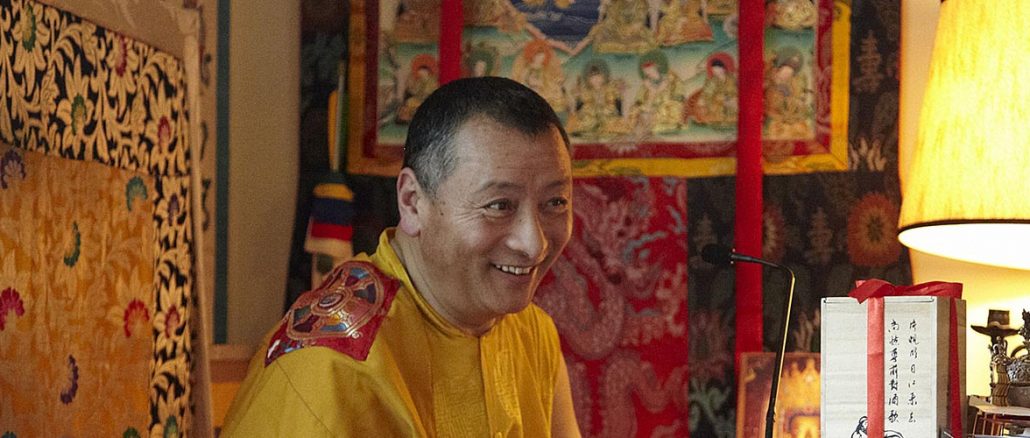
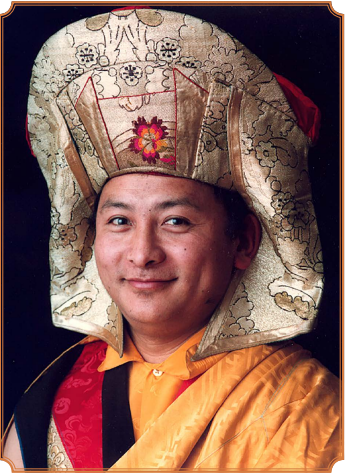
Kunzang Palchen Ling will be conducting five days of the Subtle Essence Vajrasattva puja to commemorate the fifth-year anniversary of the parinirvana of our beloved teacher Bardor Tulku Rinpoche.
Vajrasattva is the buddha of purification. As the “action” or karma protector, he also manifests the energies of all Buddhas. The Subtle Essence Vajrasattva Sadhana is performed annually for the benefit of all those who have passed away in the preceding year. The retreat will be held each year on these auspicious dates in order to commemorate the passing of Bardor Tulku Rinpoche into parinirvana.
Texts:
Subtle Essence VajrasattvaKang SolKPL Long Life PrayersRoad Map
Donations towards tsok and flowers is welcomed.
Donate with PayPal or Credit Card
(You do not need to have a PayPal account in order to use your credit card at the PayPal website.)

Who is Vajrasattva
taken from a Teaching by
Vajracharya Lama Tashi Topgyal
Now we’re going to recite the 100 syllable mantra of Vajrasattva, which in this case is called the 100 syllable mantra of the five families. You’ll see at the beginning it has the seed syllables of the five families, and then the three seed syllables of wrathful deities, and then the normal, or usual Vajrasattva mantra.
A couple of days ago one of you asked “who is Vajrasattva? What is Vajrasattva?” —which is actually a very good question. In the tantra called “The Two Examinations” the first question that the bodhisattva Vajragharba asks the Buddha: “who is Vajrasattva? Why do you say ‘Vajrasattva’? Why ‘vajra’? Why ‘sattva’? A lot of the rest of that tantra is an answer to that, but to put it briefly, lama said:
in terms of nature, so who or what Vajrasattva really is, he’s Samantabhadra, he is buddhanature, and he is awakening. But without straying from that state, without becoming anything else he nevertheless manifests as the five sambhogakaya buddhas, the five families, and from them manifest all nirmanakayas.
Now as you have heard repeated many times during these ten days all of these deities—Samantabhadra, the five families, and the nirmanakayas are actually all innate within you. In essence, while we think of the sambhogakaya as the five families, they are really all Vajrasattva; so Vajrasattva is all of the five buddha families. And therefore, even more than that, Vajrasattva is all of the hundred families, all of the hundred peaceful and wrathful deities embodied in one.
In terms of his particular activity, or function, he is associated primarily with the vajra family, and therefore, like all deities of the vajra family his primary function is purification. So through Vajrasattva we purify all of our wrongdoings, and all of our obscurations. Wrongdoing includes natural wrongdoing—in other words things that are just wrong, and also violations of promises, and in this regard, especially, the promise that we call ‘samaya’.
So all purification deities are of the Vajra family. Even in the case of when we do “Homa,” or ‘fire-offerings’ for the sake of purification, those are always done invoking deities of the Vajra family. But foremost among all these purification deities is Vajrasattva, and because he embodies all of them and as a sign of that his hundred syllable mantra is the mantra of the hundred peaceful and wrathful deities who, as has been said, are present within our bodies.
Now with regard to mantra it’s important to understand that while mantra appears to us as sound, or as written letters, or as visualized syllables, mantra and deity are the same thing in nature: the mantra is the deity—the deity is the mantra. For that reason it is taught that even if you say the hundred syllable mantra one time that, just that, can purify all your wrongdoing, and all your obscurations—that is if you are completely undistracted. Since we do not want to take this for granted we recite it a lot. We don’t know how undistracted we are, so we recite it one hundred thousand times in the preliminaries, and then a hundred, or hundreds of times every day. So we will recite the Vajrasattva mantra a few hundred times.